Ford Motor announced Monday a significant shift in strategy, rolling back ambitious electric vehicle (EV) production targets and absorbing a $19.5 billion financial hit as a result. The move signals a broader industry reassessment of the EV transition, driven by fluctuating demand, shifting government policies, and the continued viability of traditional combustion engines.
Overestimated Demand, Policy Shifts Fuel the Change
Ford’s decision acknowledges a miscalculation in predicting consumer adoption of EVs. Demand has not materialized as quickly as anticipated, while internal combustion engine (ICE) vehicles and hybrids remain popular. This is not an isolated case; General Motors and Stellantis have recently adjusted their EV timelines, similarly prioritizing ICE and hybrid production.
The reversal also coincides with policy changes under the current U.S. administration. Federal incentives for EVs have been reduced, and fuel economy standards are being relaxed, diminishing the pressure on automakers to accelerate EV development. This creates a market environment where ICE vehicles remain competitive.
Factory Realignment: Jobs and Production Shifts
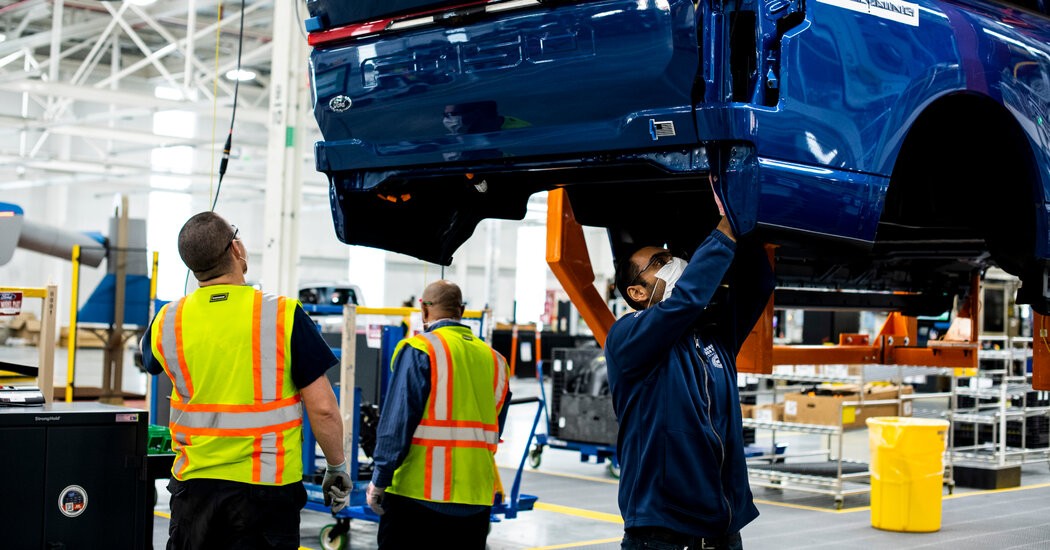
The restructuring will impact multiple Ford facilities. A planned EV pickup factory in Tennessee will now produce a gasoline-powered model instead. Electric commercial van programs are canceled in favor of gasoline and hybrid alternatives in Ohio. Even the F-150 Lightning, Ford’s flagship electric pickup, will undergo a redesign: it will incorporate a gasoline-fueled generator to extend range and alleviate “range anxiety.” Production of the Lightning was already paused in October.
Executives claim the adjustments will ultimately create thousands of jobs, though the exact distribution and impact on existing EV-focused roles remain unclear.
The Wider Trend: A Pause, Not a Retreat?
Ford’s actions reflect a larger industry trend of recalibrating EV timelines. While the long-term shift toward electrification remains inevitable, current market conditions and regulatory frameworks have forced automakers to adapt. The question now is whether this is a temporary pause to refine strategies or a more fundamental reevaluation of the pace of EV adoption.
The financial hit Ford is taking underscores the complexities of the EV transition. Despite long-term goals, automakers must respond to immediate market realities and consumer preferences, even if it means absorbing significant costs.