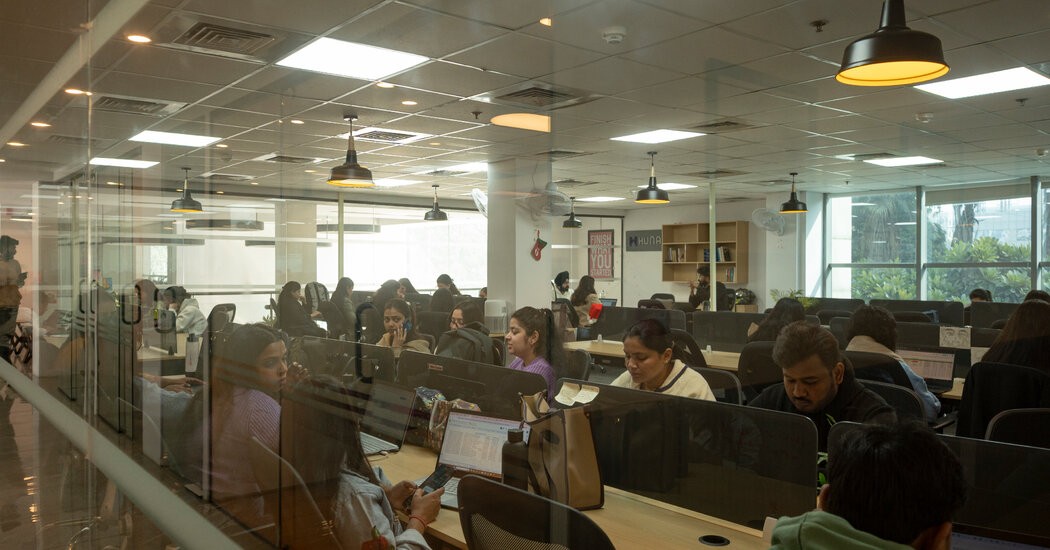
For decades, India has been the world’s leading provider of outsourced business processes, fueling economic growth with its vast, skilled, and cost-effective workforce. However, artificial intelligence (AI) is rapidly changing this dynamic, threatening to automate jobs that once formed the backbone of India’s service-based economy.
The Rise of AI in Outsourcing
Companies like Hunar.AI, based in Gurugram, are developing AI-powered chatbots and virtual agents that can handle entire workflows previously done by human workers. These include tasks such as recruitment, onboarding, customer service, and data entry. According to Krishna Khandelwal, founder of Hunar.AI, some processes no longer require any human intervention.
Economic Impact
India’s outsourcing industry currently employs over six million people and contributes nearly $300 billion to the country’s GDP – representing over 7% of its total economic output. The automation of these roles by AI could lead to significant job displacement across the sector. This trend mirrors how outsourcing itself disrupted labor markets in developed countries, but now India faces a similar shift internally.
Why This Matters
The reliance on outsourcing has allowed India to benefit from global economic trends. Now, AI is disrupting this advantage, raising questions about the future of India’s workforce and economic growth model. The country must adapt by investing in reskilling programs and emerging industries to mitigate the impact of job losses.
The long-term effects remain uncertain, but one thing is clear: India’s dominance in the global back office may be eroding as AI becomes more sophisticated and widespread. The shift will not only affect workers but also reshape the country’s economic landscape.