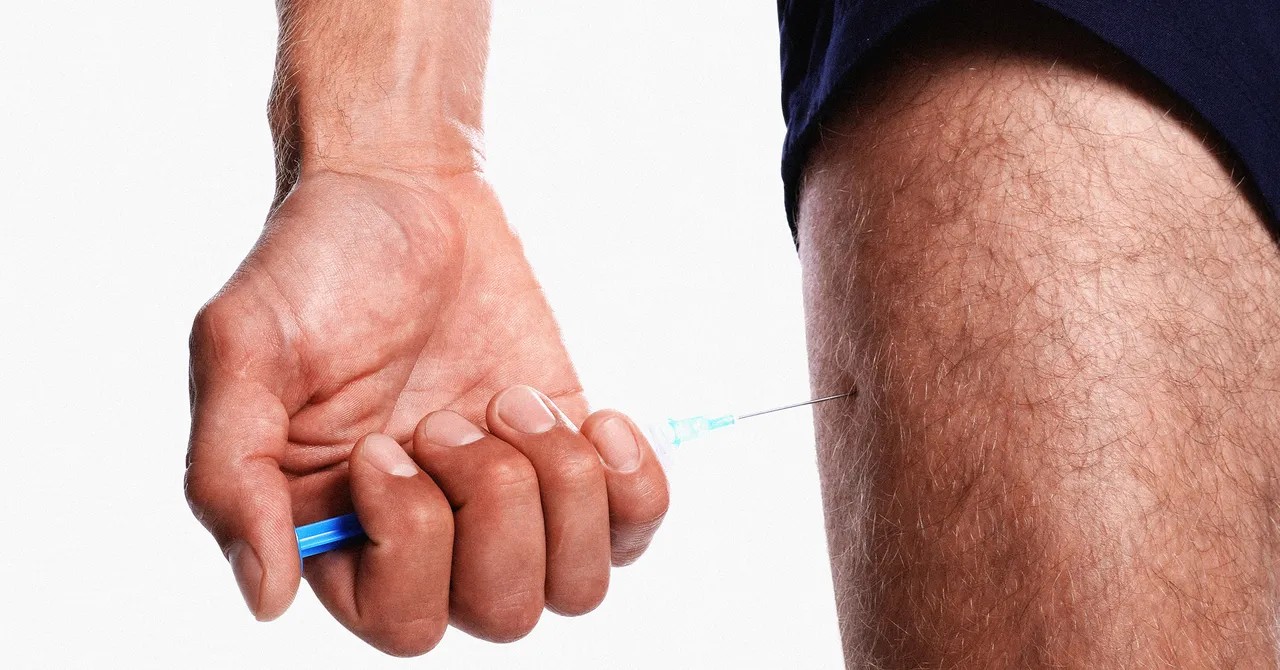
A growing number of men are obsessively tracking, testing, and artificially boosting their testosterone levels, fueled by online trends, influencers, and a broader cultural push for peak physical and mental performance. What was once considered a late-life issue is now a central concern for younger men, driven by the “manosphere” and figures like Joe Rogan and RFK Jr., who openly discuss testosterone replacement therapy (TRT).
The Testosterone Obsession: From Decline to Demand
Testosterone prescriptions in the US have surged from 7.3 million in 2019 to over 11 million in 2024, according to IQVIA data. This reflects a broader societal trend of men actively seeking ways to counter perceived declines in natural testosterone, now seen as a marker of vitality and masculinity. Some men monitor their levels every six months, comparing results like gym stats, as if maximizing T is a competitive sport.
However, this obsession risks pathologizing healthy, younger men who may not actually need hormonal intervention. The trend taps into a deeper anxiety about modern masculinity, where physical and mental strength are increasingly equated with testosterone dominance.
The Methods: From Diet to Drugs
Men are pursuing “High T” through various methods. Mark Holman, a 33-year-old health coach, drastically increased his testosterone from 622 ng/dL to 1,104 ng/dL through diet (eggs, red meat, oysters, supplements) and rigorous exercise. While he considers TRT “cheating,” many others turn to it directly. TRT, initially popular among older men facing age-related decline, is now aggressively marketed through telehealth startups and algorithmic content loops on social media.
The appeal is clear: increased energy, improved libido, enhanced focus, and a perceived edge in social dominance. As neuroscientist Andrew Huberman explains, testosterone influences the brain’s anxiety center, making effort feel rewarding and enabling men to “lean into pain and challenge.”
The Risks and Trade-offs
However, the pursuit of “High T” comes with significant risks. TRT suppresses natural testosterone production, potentially causing infertility, testicular shrinkage, baldness, and increased tendon stiffness. Stopping TRT can lead to withdrawal-like symptoms due to dopamine signaling changes in the brain.
Experts like Adrian Dobs at Johns Hopkins warn against indiscriminate use: “I’m not against treatment with testosterone, but I do think you have to be careful on who you give it to.” The trend also mirrors steroid use, with some men even stealing each other’s supplies in an obsessive quest for hormonal optimization.
Political and Cultural Context
The “High T” movement has seeped into political rhetoric. Donald Trump supporters link liberalism to low testosterone, while figures like Tucker Carlson have promoted extreme methods like bromeotherapy (testicle tanning) as solutions. RFK Jr. has publicly praised Trump’s testosterone levels, further fueling the narrative that hormonal dominance equates to leadership.
This obsession with testosterone isn’t just about biology; it’s about power, control, and a desperate attempt to reclaim a sense of strength in a rapidly changing world.
The push for artificially high testosterone reflects a broader cultural anxiety about masculinity, performance, and the perceived erosion of traditional male roles. Whether through diet, drugs, or ideological rhetoric, the pursuit of “High T” is reshaping how men view their bodies, their identities, and their place in society.