The landscape of the technology sector is shifting rapidly, marked by the departure of long-standing titans and unexpected alliances between industries that seemingly have nothing in common. From the leadership change at Apple to a massive, unconventional deal between SpaceX and an AI startup, the current week highlights a broader trend: as AI matures, the battle for influence is moving from pure software to how that software integrates with hardware and specialized workflows.
The End of the Cook Era at Apple
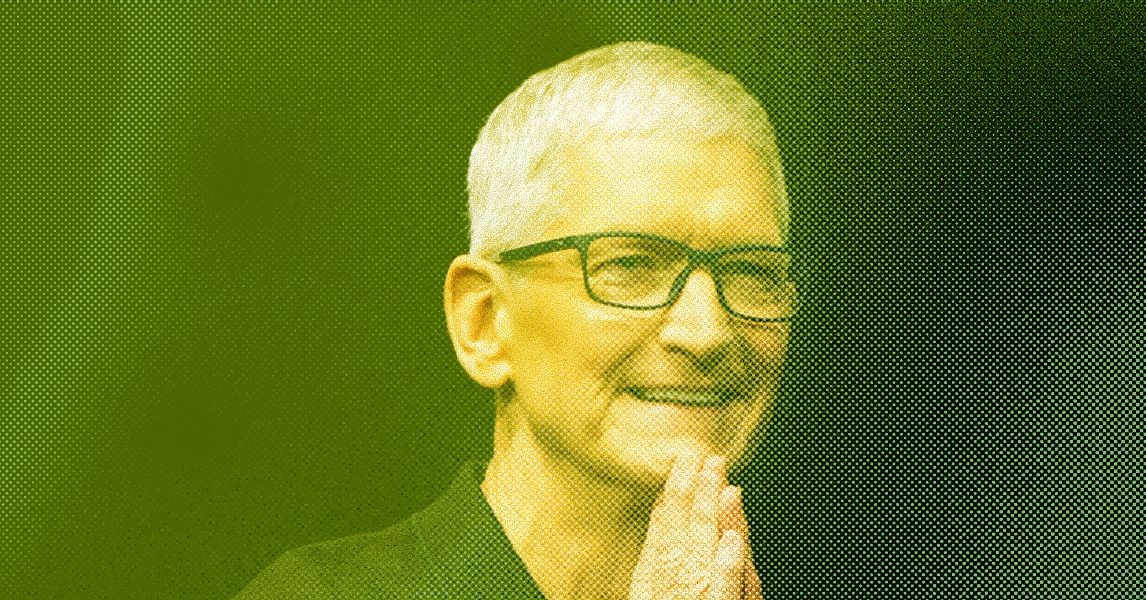
In a move that signals the end of a defining chapter in Silicon Valley, Tim Cook is stepping down as CEO of Apple. While the official transition to his successor, John Ternus, is set for September 1st, the announcement marks a pivotal moment for the trillion-dollar company.
A Legacy of Operations and Subscriptions
Tim Cook’s tenure was defined by a shift in focus from pure product innovation to operational excellence and financial growth. While he didn’t “invent” the iPhone, he perfected the machine that sells it. His legacy includes:
– Financial Scaling: Taking Apple into the multi-trillion-dollar stratosphere.
– The Services Pivot: Transforming Apple from a hardware-only company into a recurring revenue powerhouse through iCloud, Apple Pay, and the App Store.
– Diplomatic Stability: Maintaining a steady, diplomatic relationship with global leaders and various political administrations to protect Apple’s massive supply chain.
The AI Challenge for the New Guard
The central question for incoming CEO John Ternus is how Apple will navigate the AI revolution. Currently, many analysts believe Apple has “missed the boat” on the initial AI hype cycle. However, Ternus—a veteran hardware engineer—seems to be doubling down on a different strategy:
– The “Vessel” Approach: Rather than building a standalone search engine or a frontier AI model to compete with OpenAI, Apple appears content to be the platform. By integrating tools like Google Gemini into the iPhone, Apple aims to remain the primary interface through which users access AI.
– Hardware vs. Software: While startups are racing to build AI “pendant” devices or voice-only hardware, Apple is betting that humans will always require a screen, apps, and a central computing device (the iPhone/Mac) to manage complex tasks.
SpaceX and Cursor: An Unlikely $60 Billion Alliance
In a move that has surprised the tech industry, SpaceX has announced a massive deal with Cursor, an AI startup specializing in coding tools. The terms of the deal are highly unusual: SpaceX will either acquire Cursor for $60 billion later this year or pay them $10 billion for their collaborative work if an acquisition does not occur.
This partnership raises significant questions about the intersection of aerospace and artificial intelligence. Why would a rocket company invest so heavily in AI coding tools? The answer likely lies in the future of automated engineering. As space exploration becomes more complex, the ability to use AI to write, debug, and optimize code at scale could become a critical competitive advantage for SpaceX’s highly technical operations.
Palantir’s Manifesto and the Politics of Tech
The week also saw controversy erupt over a 22-point manifesto published by Palantir. The document has drawn intense scrutiny online, highlighting the growing tension between high-tech firms and the social/political implications of their work.
This controversy follows a broader trend in the tech sector where companies are increasingly forced to take stances—or at least define their philosophies—on how their data-driven tools interact with government and political structures.
The Digital Grift: AI and the Manipulation of Belief
Finally, a darker side of the AI boom has emerged in the form of social engineering. Reports have surfaced of a scammer using an AI-generated persona —a fictional woman designed to appeal to specific political demographics—to target and defraud individuals within the MAGA movement. This serves as a stark reminder that as AI becomes more convincing, the potential for highly targeted, identity-based fraud continues to escalate.
Conclusion: Whether through leadership changes at Apple or massive, cross-industry deals like the SpaceX-Cursor partnership, the tech industry is moving away from “hype” and toward deep integration. The focus is shifting toward how AI can be embedded into the hardware and professional workflows that already dominate our lives.