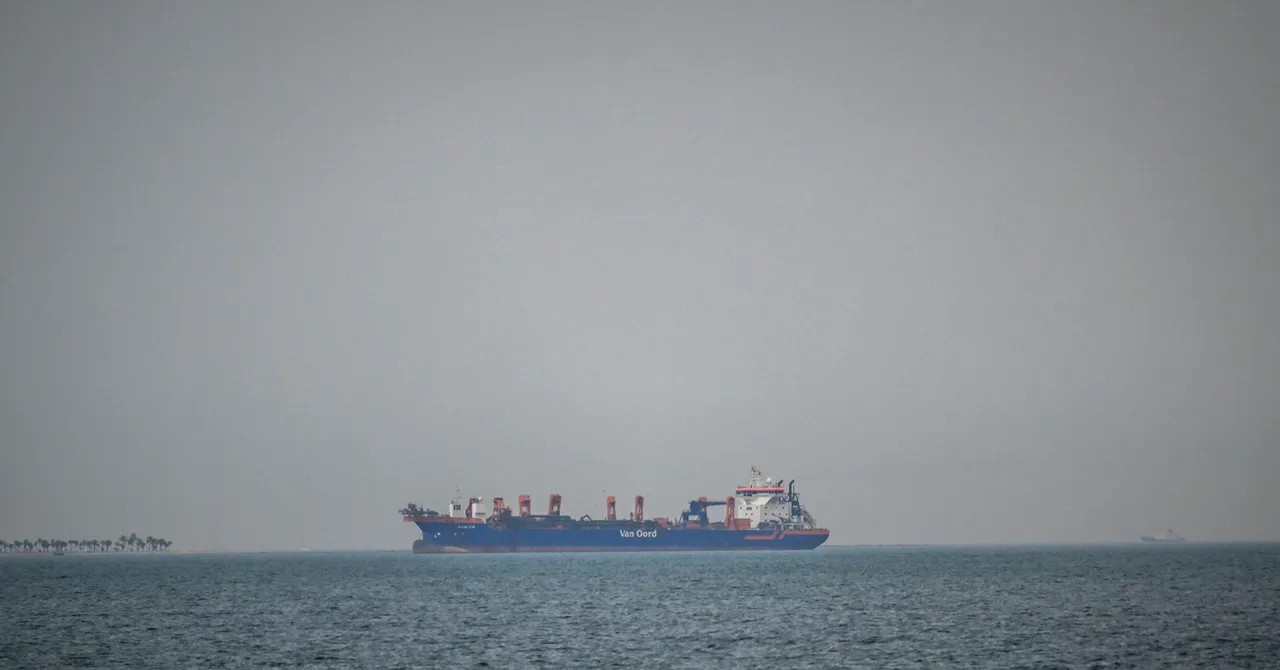
The escalating tensions in the Strait of Hormuz aren’t just disrupting global trade; they’re trapping crews aboard vessels caught in a dangerous legal and logistical deadlock. While the world focuses on geopolitical fallout, thousands of seafarers are left stranded, often without pay, legal recourse, or even a clear path home. This crisis isn’t just about conflict; it’s a symptom of a fundamentally flawed shipping system where ownership, accountability, and worker protection rarely align.
The Human Cost of Maritime Neglect
PK Vijay, a seafarer from Kerala, India, represents one of many caught in this system. He took out a loan for what he thought would be stable work, only to find himself assigned to a derelict vessel with no guaranteed transfer to a functioning ship. After 14 months without pay and with no response from his employer or agent, Vijay remains legally unable to disembark. He’s not alone: the crew of the Mahakal has been abandoned by its owner for over a year, with no official “sign-off” letter allowing them to return home.
This isn’t an isolated incident. The region has seen a surge in ship abandonments, exacerbated by conflict and lax regulation.
A System Designed for Crisis
The modern shipping industry is intentionally complex, spanning multiple jurisdictions: a vessel can be owned in one country, registered in another, and operated by a third. This structure allows trade to flow, but in times of crisis, it leaves workers in a legal gray zone. Owners can abandon vessels without clear repercussions, as no single authority is consistently responsible.
The International Transport Workers’ Federation (ITF) has identified the Arabian Gulf, the Strait of Hormuz, and parts of the Gulf of Oman as high-risk zones. They urge owners to allow crews to terminate contracts, but this relies on voluntary cooperation – something increasingly rare in cases of abandonment.
The ITF recorded 409 ship abandonments in 2023, affecting over 6,200 seafarers globally, with over 150 cases in the Middle East. Indian, Filipino, and Syrian nationals are disproportionately affected. Distress calls have surged since the recent escalation of conflict.
The Rise of Ghost Ships
Vessels like the Mahakal often operate outside formal oversight. They may be owned by private individuals and unregistered with international bodies, making accountability nearly impossible. In some cases, ITF investigators have documented destroyed machinery, leaving ships without fuel or power. One seafarer even sent a video of a missile exploding just meters from his vessel.
These aren’t just logistical failures; they’re humanitarian crises unfolding at sea.
Beyond the Physical Risk
The psychological toll on stranded crews is immense. Isolation, uncertainty, and the inability to return home create a deep sense of desperation. Vijay admits to lying to his family, pretending to be happy while his situation remains unchanged. He hopes to rebuild his life, but the infrastructure that brought him there offers no clear escape.
Global shipping continues to function, rerouting cargo and adapting to risk. However, for those trapped outside these systems, movement is not guaranteed. The broken machinery of accountability leaves them stranded between conflict and bureaucratic indifference.
The crisis highlights a grim reality: while trade flows on, the human cost of a fragmented shipping system continues to rise.