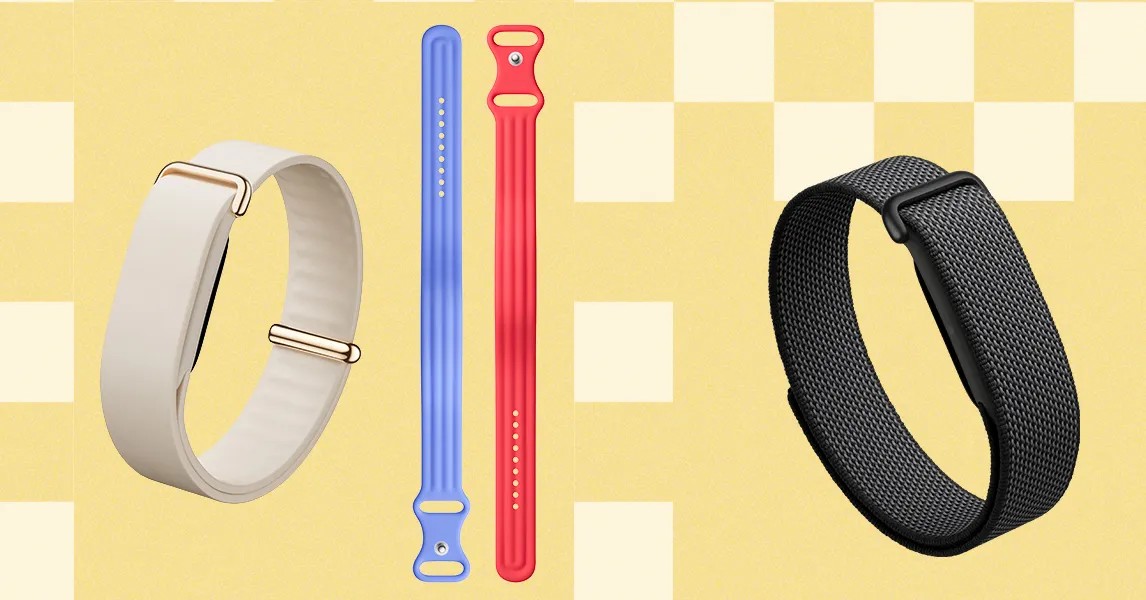
You won’t notice it.
That is the point. The new Fitbit Air weighs 12 grams. With the band. It is the lightest device Google has ever put on your wrist. It fades into the background while you live your life, quietly logging your existence. It does not yell at you. It does not vibrate unless it has to. It just sits there. Collecting data.
This is ambient health.
The concept is Google’s latest bet. Always-on tracking. Zero attention demanded. For some, it’s a gentle nudge. For others? It feels like your body is being constantly translated into raw numbers. A step toward a future you might not ask for.
Designed To Disappear
Remember the Fitbit Flex? The screenless brick from 2013? It launched at $99. So does the Air.
But this is the first time Fitbit has gone screenless since Google bought the company. And you feel the difference.
The Air is sleek. Cheap relative to the Pixel Watch ecosystem, but premium in build. Google claims it is 20% lighter than the discontinued Luxe. Compared to the Whoop strap, which sits heavy at 27 grams? The Air vanishes on the wrist. Almost literally.
Let’s talk about the competition.
Whoop. It is the obvious rival. But I hate their attachment system. Those metal pins? They loosen. They pop off. You adjust the band, and pop. The tracker slides loose. I once found my Whoop on my pillow. With the Air? It stays put. The sensor clicks into place. No fiddling. No fear of loss. Swapping bands takes three seconds.
It comes with the Performance Loop Band. Woven. Recycled. Micro-Velcro. Soft. Breathable. If you have an extra $30, you can grab a Stephen Curry co-design band. Curry is a performance adviser for Google’s AI health features. Or there is the sweat-proof Active Band, or the Elevated Modern Band that looks like jewelry.
I used the default loop every day.
You can wear this with a watch. Specifically, a Pixel Watch. Data syncs. History stays intact. But not with Apple Watch yet. Not with Samsung. Google promises compatibility later. For now? Stick the Air on one wrist and your mechanical timepiece on the other. Nobody will know you are monitoring your cardio.
The battery lasts seven days. Standard for the brand. Charging takes 90 minutes from empty. But here is the trick: five minutes in the dock gives you a full day of use.
Proprietary charger, though.
Don’t lose it. Buy a spare.
There is no screen. How do you know when it is dead? You double-tap the sensor top. I often tapped twice, twice, twice before it responded. A tiny LED blinks white if you have juice (above 20%). Red if you don’t. Solid red means dead. The app pings you when you are down to a day’s charge. It buzzes your wrist below 20%. It is clunky. But it works.
Ambient Computing
The device is just a shell. The app is the brain.
The new Google Health app replaces the old Fitbit interface. It connects to Apple HealthKit and Health Connect. Android and iOS users are finally equal. The dashboard is customizable. Pin what matters. Hide what doesn’t. Set targets. Watch guided workout videos.
But the real change? The AI.
You start by chatting with the Health Coach. It is powered by Gemini. You tell it your goals. Your obstacles. You can even upload medical records. It spits out a weekly wellness plan. Not a prescription. A suggestion.
It felt human. Not clinical.
The Coach becomes central. More important than the steps count. It texts you. In the morning. Sleep recap. Post-workout summary. Nightly check-in connecting stress to activity to recovery. Each message ends with a question. How do you feel?
It invites a chat. Not just a notification to swipe away.
I was pulled back to the app constantly. Not for the numbers. For the conversation.
Activity detection? Mostly solid.
The Air recognizes walks. It gives you intensity summaries afterward. It hallucinates a little. Once it logged a walk as a run. Then, mid-stream, it sent a note. Heart rate says this was actually a walk. A partial real-time correction. Odd. Smart? Maybe.
The algorithms learn.
I missed my high-intensity class for the first three days. I manually logged it. On the fourth day? The Air knew. Like the Oura ring, it needs context. You feed it data; it feeds you better patterns.
If you launch a workout in the app, you get live stats. Heart rate. Time. Cardio Load. The last one estimates cardiovascular strain. It is just a proprietary score. Take it as guidance, not gospel.
Sleep tracking is better. Google says their new model is 15% more accurate. Nap tracking is sharper. They added a “restlessness bar.” The graphs are clean. No wellness jargon overload.
But what I liked best was how it handled failure.
I didn’t tighten the band one night. The Air slid off my wrist hours in. The app gave me a terrible sleep score based on three recorded hours. I fixed the time window. Did it try to guess the missing sleep? Did it hallucinate REM cycles? No. It admitted defeat. Not enough data.
That honesty matters.
The Air also tracks cycles. Nutrition. Mental health. You can log your mood. Track resilience. It ties emotional state to physical state. A feedback loop.
It is useful.
But do not take it as absolute truth.
The Cost Of Clarity
Is all this good for you?
Maybe not.
Constant scores can lead to obsession. Over-tracking. The kind that makes you anxious rather than healthy. The Air lets you ignore it. Mute the check-ins. There are no nagging prompts if you turn them off. Google also pushes data autonomy. Export your data. Delete it. Do whatever you want.
But there is a catch.
Most of this? The AI coach. The deep insights. The contextual magic.
That requires a subscription. Google Health Premium.
It costs $10 a month. Or $100 a year.
Buy the Air and you get a three-month trial. After that? You get the basics. The raw numbers. But the meaning disappears. The translation from data to action stops.
That is the real value. Not the sensor. The insight.
Compared to Whoop? Whoop charges between $199 and $599 a year depending on the tier and contract. Google is cheap. Suspiciously cheap, perhaps, given how much tech they packed in.
Is it medical care?
No.
Do not show this chart to your doctor and expect a diagnosis. It is not a replacement for health care. But it is a tool. For people tired of reactive medicine. For those who want to feel in control.
The Fitbit Air is empowering. It is quiet. It is approachable.
It is always there. Watching.
Will you notice the watch on your wrist tomorrow morning?