
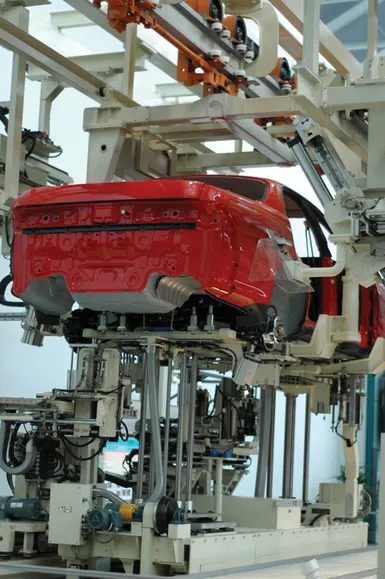
A car rolling off the assembly line is the ultimate symbol of the efficiency of modern production systems. But behind this metal frame is a complex web of change. Every industrial method is basically just a process. It takes raw input and turns it into something useful.
Think of it as making a deal. You put things in it. You get things out there.
Economists call inputs factors of production. Simply put: labor, capital and land. Production managers could use a slightly more functional framework, the “five Ms.” It is people, machines, methods, materials and money. You need people to build it. You need tools to shape it. You need a way to do it. You need physical things. And you need money to keep the lights on.
Managing the Flow
The production system is not static. It’s a series of moves.
First is the physical flow. The materials move from the raw warehouse to work in progress. Then they become finished products. These objects move through the factory floor depending on the capacity of the system. If the bottleneck at station A is slow, station B will remain idle. The entire line moves at the speed of its weakest link.
Then there is the flow of information. Paperwork. Digital signals. Instructions. These are included with the physical goods. When the data channel is blocked, the physical flow stops. Managing this information is a large part of the production manager’s job. You can’t fix what you can’t measure.
Quality as a constraint
Capacity is not the only limit. Quality is just as important.
If you can make a million cars a day, but they all break down in a week, you’ve failed. Quality is measured by objective measures. This also includes appearance. Performance. Resistance. Ease of maintenance. It’s also about timeliness. Will the product arrive as promised? Are the costs reasonable? Are the instructions clear?
These are not optional accessories. They are part of the system definition. A system that produces waste, no matter how fast, is a bad system.
Types of production systems
Not all factories look the same. There are three general types of basic production systems. Each serves different needs.
- Batch system
- Continuous System
- Project system
Let’s look at the batch system first. Here, universal devices meet different requirements. They produce small amounts. The technical data varies from batch to batch.
A group of elements goes through one or more stages together. At the end of the episode, they form a complete set. This is often called a job shop.
Who uses this? Manufacturer of special machine tools. Heavy construction machinery. Special chemicals. Processed foods. Even in the service sector, large insurance companies use batch systems to process claims. It is flexible. It’s not mass production. It is customized.
Why is this important for your wallet? Because series production enables individual customization without the extreme costs of individual projects. It balances versatility and efficiency. But it requires close coordination. One late batch can hold up the next. The manager’s job is to maintain the flow, even if the requirements change.

Mechanisms of mass production
It looks like a simple rising loaf of bread, but the machinery behind it is part of a much larger, relentless machinery. This is a continuous production system where products go through a fixed sequence of operations. It is not about customization. It’s all about volume.
Most of the products processed in this way follow the same route. The goal is clear: to reduce production costs. To get there, companies invest in specially designed equipment. Standard tools won’t cut it. You need machines that are built for a specific task and run all day, every day.
Employees do not build the entire product. They handle small, segmented tasks. These steps are simple. They are easy to master. A worker might tighten one bolt on a car engine or install a single wire in a television. Once a movement is learned, the movement becomes efficient. Fast. Repetitive.
That’s why we see these systems in mass production everywhere. They are often called assembly line systems or simply assembly systems. The logic is the same whether you are looking at:
– Car engines
– Finished cars
– washing machines
– Personal computers
The throughput is high. The variety is low. The cost per unit drops when the line runs faster. There is no waiting. No retooling for different models. Just the relentless forward movement of goods through a process designed to shave seconds off every movement.
Is it efficient? Yes. Is it rigid? Absolutely. Change one part of the line, the whole rhythm can stutter. But for the average consumer buying a washing machine, that rigidity is what keeps the price tag low. The trade-off is invisible. You get a cheap, reliable appliance because a thousand people in a factory are doing one thing over and over until it’s perfect.
The bread in the window rises slowly. The cars on the lot roll out fast. Both are the result of systems designed to move matter from raw material to finished good with minimal friction. The difference is just the speed of the clock.
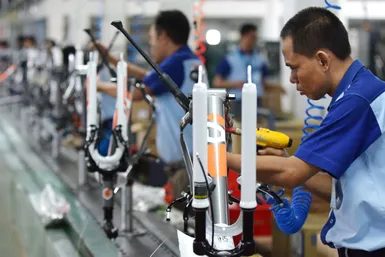
Batch and continuous operations rarely work separately. You often see them side by side, especially in complex manufacturing areas such as the electronics industry. Consider integrated circuits. Thousands of them are processed simultaneously on large silicon wafers. This batch approach handles dozens or even hundreds of steps at once. Only later are these small circuits, only a few millimeters wide, separated from each other. They move to a continuous line for final assembly, where they join other components together to form the final product.
But there is a third way.
The One-Shot Production Model
This is a project or “one-off” system. These are individual, unique items. Imagine a single building. A special ship. Or a prototype for a new airplane or a large computer.
In this model, resources do not circulate continuously. They are not repeated in batches. Instead, they are gathered together just once for each task.
Because each product is unique, standard production metrics often fail. Costs or timelines for something that has never been built before cannot be easily predicted. This uniqueness brings risks. The need for specialized management techniques also arises.
Project systems require unique management strategies to keep costs from spiraling out of control.
The goal is not just completion. It’s containment. Management must develop specific methods to limit production costs. Without these controls, the one-time nature of the work can lead to unmanageable costs. The challenge is to create structure out of chaos. You are building something new. You are moving resources that may no longer be used. You are balancing precision and unpredictability.
How do you price a service that only exists once? How do you schedule a task without historical data?
These are questions that project managers answer. They build frames around the unknown. They track every hour. They monitor every material cost. They don’t do this because it’s easy, but because it’s the only way to make sure the end product doesn’t go over budget.
The result is a tight, controlled environment. One that only exists for the duration of the project. After the final rivet is set and the final code is compiled, the resources disperse. The system dissolves. Leaving behind a single, unique outcome.
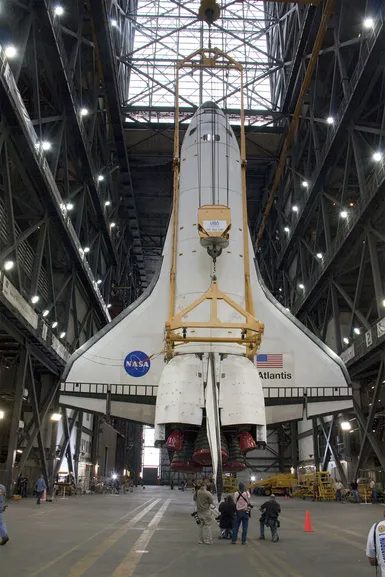
It’s hard to appreciate the enormity of NASA’s Kennedy Space Center Vehicle Assembly Building until you step inside. It is one of the largest buildings on earth. The indoor air volume is approximately 3.7 million cubic meters. That’s about 130 million cubic feet. Built to handle Apollo-Saturn V rockets.
The space shuttle Atlantis is currently operational.
The orbiter hovers high above the ground. Wait to connect to an external tank. Next is the solid fuel rocket booster. It then becomes a flyable stack.
The interior of the building is designed with vertical integration in mind. Engineers build rockets from scratch. The scale of machines exceeds human workers. I hear the sound of cranes. The echoes of the conversation bounced off the high walls.
VAB is more than just protection. This is your workspace. Protect sensitive equipment from the Florida heat. Avoid wind and rain. The air is filtered. The environment is under control.
This building has served many missions. He was in charge of the Apollo program. He was in charge of the space shuttle program. The next generation of rockets is ready. It is used in the SLS and Orion spacecraft. Flexible design. Adjustable.
The sight of Atlantis floating in the vastness of space is iconic. It represents human ingenuity. It represents the ambition to leave Earth. It’s a testament to the power of technology.
This building is a symbol of opportunity. It reminds us of the effort it takes to reach for the stars. VAB is more than just steel and concrete. It is a vessel for dreams.
The next rocket will replace it. This process repeats itself. The cycle continues. The building is ready.