
Pixar didn’t start as a movie studio. It began as a computer graphics lab.
The history of Pixar is the history of technology meeting art. What started as a niche division within Lucasfilm evolved into the engine behind the first fully computer-animated feature film. Today, it stands as a wholly owned subsidiary of Disney, headquartered in Emeryville, California. But its DNA is rooted in code, not celluloid.
The Lucasfilm Origins
The story traces back to the 1970s at the New York Institute of Technology (NYIT). Ed Catmull and a team of computer scientists were exploring the basics of computer graphics. In 1979, Catmull moved to Lucasfilm, George Lucas’s California production company, to lead its nascent computer division. His NYIT colleagues followed.
The goal was simple: improve graphics technology. The result was the Pixar Image Computer. This machine could render high-resolution, three-dimensional color images. It had applications far beyond film. The name itself was a faux-Spanish word meaning “to make pictures.”
By 1984, the division had hired John Lasseter, an animator previously worked with at Disney. Lasseter saw the potential in the hardware. He used the company’s technological strides to create short computer-animated films.
The Steve Jobs Era
George Lucas wanted to streamline his business. In 1986, he spun off the computer division as an independent company. Steve Jobs, then running NeXT Inc., acquired the controlling interest. Jobs became chairman. Catmull became president and CEO.
The initial plan was hardware. Jobs pushed the company to market the Pixar Image Computer and develop high-tech graphics software. It was a slow road to profitability. By 1990, Pixar sold its hardware operations to survive. That same year, the company moved from San Rafael to Point Richmond, California.
Meanwhile, the creative side was gaining traction. Lasseter’s short films won acclaim. Tin Toy, released in 1988, even won an Academy Award. By 1989, Pixar began producing computer-animated television commercials.
In 1991, a pivotal partnership formed. Pixar entered an agreement with Disney. The deal was to jointly develop, produce, and distribute three feature-length animated motion pictures.
Toy Story and the IPO
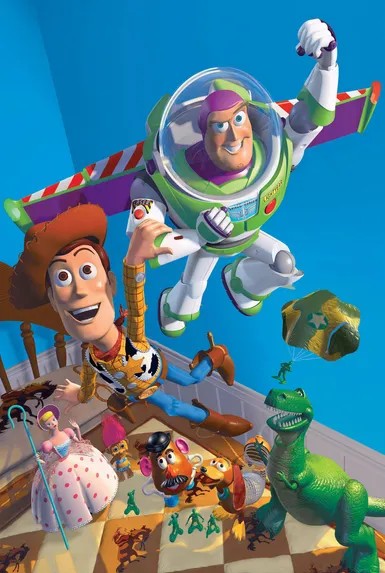
Pixar reorganized. The focus shifted entirely to creative storytelling. The first project was Toy Story.
Released in 1995, Toy Story made history. It was the first entirely computer-animated feature film. The movie imagined the private lives of toys. It was family-friendly. It was funny. It was a massive critical and commercial hit.
“Toy Story opened in theaters in 1995 as the first entirely computer-animated feature film, earning director John Lasseter an Academy Award for special achievement.”
The success changed everything. One week after the film’s release, Pixar launched its initial public stock offering (IPO). Steve Jobs, now acting as CEO, saw the company’s value skyrocket. By 1997, revenues from the film and its merchandising were substantial. Pixar negotiated to extend its partnership with Disney.
The studio continued to expand. In 2000, Pixar moved to its current headquarters in Emeryville, California. The hits kept coming.
A Bug’s Life (1998)
Toy Story 2 (1999)
Finding Nemo (2003)
The Incredibles (2004)
Each film reinforced Pixar’s reputation for intelligent and emotional storytelling. The visual innovations were praised, but the characters drove the success.
The Disney Acquisition and Legacy
By 2006, the Disney contract was nearing its end. Steve Jobs made a decisive move. He sold Pixar to Disney. The deal made Pixar a wholly owned subsidiary of the larger entertainment giant.
Leadership shifted. Catmull became president of both Walt Disney Animation Studios and Pixar Animation Studios. Lasseter became the chief creative officer for both studios. This arrangement lasted until 2018, when Lasseter left amid allegations of sexual misconduct.
The output remained consistent. The studio continued to dominate the Academy Award for best animated feature film during its first decade (starting in 2002). Pixar captured eight nominations and six wins in that period alone.
Notable films include:
* WALL∙E (2008)
* Up (2009) – nominated for best picture
* Toy Story 3 (2010) – nominated for best picture
* Brave (2012)
* Monsters University (2013)
* Inside Out (2015)
* Finding Dory (2016)
* Coco (2017)
* Incredibles 2 (2018)
* Toy Story 4 (2019)
* Soul (2020)
* Lightyear (2022)
* Inside Out 2 (2024)
Up and Toy Story 3 received Oscar nominations for best picture. This is a rare honor for animated films.
Pixar’s journey from a computer graphics experiment to an animation powerhouse is complete for now. But the studio’s influence on how we tell stories with digital tools remains unresolved. The technology that started with Ed Catmull at NYIT now defines a generation of cinema. The question is no longer if computer animation can work. It’s what comes next.
The Pixar Tax: Why Sequels Cost More to Make
The animation industry runs on a brutal arithmetic. You spend three years building a world from nothing. Then you spend another two animating it. Then you market it to the world. If it works, you get a franchise. If it doesn’t, you get a write-off. But for Pixar, the formula shifted. Not because the storytelling got better. It got complicated.
Look at Incredibles 2 (2018). Brad Bird returned to the helm. The story wasn’t new. Bob was sidelined. Helen took the lead. The dynamic flipped. It was familiar. Safe. The budget ballooned to roughly $200 million when you factor in marketing and global distribution. The box office? $1.24 billion. A monster. But that number hides the cost of maintenance. The characters aged. The technology upgraded. The expectations grew.
Then came Toy Story 4 (2019). Josh Cooley took the chair. Toy Woody’s arc felt complete. The fans knew it. The studio knew it. Yet they made it anyway. The budget sat closer to $175 million. Marketing added another chunk of cash. The result? $1.07 billion at the global box office. Profitable. Yes. But the efficiency per dollar spent dropped. The narrative weight increased. The animation pipeline stretched thinner.
This isn’t just about big budgets. It’s about the Pixar sequel production costs and how they inflate without guaranteeing proportional returns. In the early days, Toy Story 1 cost $30 million. Toy Story 2 hit $90 million. The leap wasn’t linear. It was exponential. Why? Because the technology had to catch up to the ambition. Because the audience demanded photorealistic hair and fabric simulation. Because the market demanded spectacle.
How Animation Budgets Have Inflation
Tracking how Pixar sequel budgets have increased reveals a stark trend. The per-minute cost of animation has climbed. In 1995, a minute of Toy Story 1 cost roughly $10,000 to produce. By Incredibles 2, that number hovered near $40,000 per minute. The difference isn’t just labor. It’s compute. It’s rendering farms. It’s the sheer complexity of simulating cloth on Elastigirl or the subtle physics of Forky in Toy Story 4.
The trade-off is clear. You get a more beautiful product. But you also get a higher break-even point.
| Film | Release Year | Budget (Est.) | Global Box Office | Profit Margin* |
|---|---|---|---|---|
| Incredibles 2 | 2018 | $200M | $1.24B | ~50% |
| Toy Story 4 | 2019 | $175M | $1.07B | ~40% |
| Toy Story 3 | 2010 | $200M | $1.06B | ~35% |
*Margins vary based on international distribution deals and ancillary revenue streams.
The data suggests that