Friedrich von Wieser coined the term in the late 19th century. He wanted to formalize a simple truth. Every choice kills a different future.
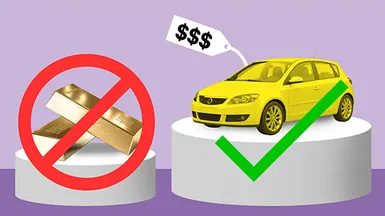
Economists call this opportunity cost. It is the gain you lose by picking one path over another. You do not just spend money. You spend time. You spend potential. The hidden loss is embedded in the road you did not take.
Ignoring this leads to bad financial decisions. Here is how it plays out in real life.
The Hidden Price Of Consumer Goods
Buy a $2,000 television. You get the screen. You get the sound. That is the visible cost.
Now look at the invisible cost. That $2,000 is gone. It cannot pay down high-interest debt. It cannot buy an asset that appreciates. A TV depreciates the moment you unbox it.
Instead of entertainment, you could have bought stability. You could have bought equity. You chose the TV. You sacrificed the growth of capital. The trade-off is real.
College Versus Workforce Entry
Consider the classic dilemma. High school graduate. Two doors.
Door one: College. You delay earning by four years or more. You miss out on job skills. You miss seniority. You miss the years of experience peers gain while you are in lecture halls.
Door two: Work immediately. You earn money now. But you give up specialized knowledge. You miss professional networks. You might hit a ceiling in certain careers. A degree opens doors to higher long-term earnings. Without it, those doors stay locked.
Both choices have a price. One pays in delayed gratification. The other pays in lost credentials.
Investing Risks And Mental Capital
Active traders know this pain. Holding a losing stock is not just a financial error. It is a capital trap.
That tied-up money could be working elsewhere. The opportunity cost here is twofold.
First, there is the financial drag. Your capital sits idle while better opportunities pass by.
Second, there is mental capital. Stress builds. Hesitation sets in. You become risk-averse in other areas because you are stuck in a bad position.
Risk and reward are opposites. They are each other’s opportunity cost.
Safe assets like Treasury securities reduce volatility. They also cap your upside. High-yield bonds or tech shares offer greater returns. They also bring higher volatility. You cannot have both. You pick your poison.
Quantifying The Unquantifiable
How do you calculate this? You can’t. Really.
It is based on what could have happened. Not what did. It is hypothetical. It is ghost money.
Still, you can use a rule of thumb. Pick the path where the upside clearly outweighs the downside of the alternative.
Look at this comparison.
- S&P 500 ETF: Moderate risk. Moderate reward. You buy shares directly. Your risk is defined. You control less notional value per dollar.
- S&P 500 Futures: High risk. High reward. You use margin. You control more notional value with less capital. Your losses can exceed your initial investment.
The opportunity cost of the ETF is lower potential gains. The opportunity cost of the futures contract is the risk of ruin.
A momentum trader might choose futures. A buy-and-hold investor chooses the ETF. Neither is wrong. Both are trade-offs.
Aligning With Your Goals
Every financial decision has a hidden price tag. That is opportunity cost.
Before you click buy or sign the contract, pause.
What are you giving up?
Are you aligning this with your risk tolerance? Your time horizon? Your actual goals?
Thinking about this shifts your mindset. It stops you from looking only at the sticker price. It forces you to see the alternatives.
The road not taken is always waiting. You just have to decide if it is worth the cost.